Urban mobility is a growing challenge. As cities grow, so do vehicles, congestion, and the persistent problem of finding parking. Traditional curbside parking and multi-storey lots were designed for a different era—one where demand was lower, and expectations for convenience and efficiency were modest. Today’s residents, visitors, and businesses expect seamless experiences, faster turnarounds, and solutions that reduce time wasted, emissions, and operational costs.
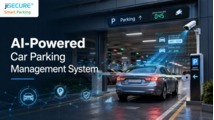
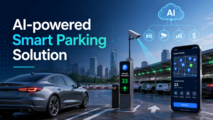
Smart parking management is not a nicety anymore—it’s a necessity. Below we explain, in depth, why every city should adopt modern parking management software and smart parking software, how these systems work, the benefits they deliver, and what features to prioritize when selecting the best Parking software or Parking Solutions for municipal and commercial deployments.
1. Reducing Traffic Congestion and Emissions
One of the most visible benefits of smart parking solution deployments is the reduction in traffic caused by drivers circling for a vacant spot. Studies repeatedly show that a significant fraction of urban traffic — sometimes up to 30% in high-density areas — comes from drivers searching for parking. That circling behavior:
Wastes time and fuel
Increases greenhouse gas emissions and local air pollution
Creates unnecessary congestion that affects public transit and commercial deliveries
Parking management software addresses this by providing real-time availability data and guidance. When drivers are routed directly to open spaces via dynamic signage or mobile apps, search time drops dramatically. This results in less idling, lower emissions per driver, and smoother traffic flows on arterial and local roads. The knock-on effect is measurable: less congestion improves bus schedule reliability, reduces delivery delays, and increases overall urban mobility efficiency.
2. Maximizing Utilization of Existing Parking Assets
Cities and private operators often underutilize parking assets because visibility into occupancy patterns is low. A lot that appears full at the front may still have numerous open spaces at the rear; garages may have uneven distribution across levels. Parking software delivers data-driven insights:
Real-time occupancy monitoring shows exactly how every lot, floor, and bay is used.
Historical usage analytics reveal peak times, seasonal patterns, and underutilized assets.
Dynamic pricing and time-based controls increase turnover in high-demand zones while filling lower-demand areas.
By optimizing utilization, municipalities and private operators can defer costly expansion projects or reallocate revenue from parking to other public services. Better asset utilization also boosts profitability for commercial operators while improving availability for drivers.
3. Enhancing User Experience and Accessibility
Today's drivers expect convenience. smart parking software improves the user experience in multiple ways:
Mobile reservations let users book spots in advance, eliminating uncertainty for visitors and customers.
Wayfinding guidance (in-app or via digital signage) points drivers to the nearest available spaces, reducing stress.
Digital payments and integrated billing simplify transactions—no more coins, tickets, or long payment lines.
Accessibility features can reserve and dynamically allocate accessible bays based on demand, improving compliance and convenience for users with disabilities.
A better parking experience directly influences commercial activity—shoppers stay longer, patients arrive on time for appointments, and employees lose less time looking for a bay. These quality-of-life improvements are especially important for locations like hospitals, retail centers, and civic buildings where punctuality and accessibility are critical.
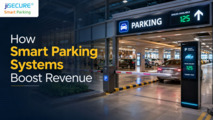
4. Increasing Revenue and Enabling Dynamic Pricing
Modern Parking Solutions enable advanced revenue strategies:
Dynamic pricing adjusts rates in real time based on demand, time of day, and special events—capturing more value during peak hours while keeping off-peak pricing attractive.
Automated enforcement and digital payments reduce leakage from unpaid parking and manual errors.
Analytics-driven decisions identify underperforming zones and opportunities to revise rates or create subscription models for commuters.
For cities, this means parking becomes a revenue stream that can fund transit improvements, street repairs, and other public services. For private operators, revenue optimization increases ROI on existing infrastructure and supports better maintenance and customer services.
5. Enabling Data-Driven Urban Planning
Parking is not isolated; it intersects with land use, transit planning, and economic development. parking management software collects rich datasets—occupancy, turnover, duration, and temporal patterns—that are invaluable for planners. These insights help city officials and planners to:
Model the impacts of policy changes (e.g., altering curbside regulations or adding bike lanes).
Understand demand around new developments and plan loading zones or drop-off areas.
Prioritize investments—whether to expand parking, improve transit services, or reassign curb space to pedestrians.
Integrating parking data into broader urban analytics platforms leads to smarter, more sustainable planning. Decisions based on real behavior, not guesswork, produce better outcomes for residents and businesses.
6. Strengthening Enforcement and Compliance
Manual enforcement is resource-intensive and prone to inconsistency. smart parking software makes enforcement more effective and fair:
Automated detection tools (camera-based or sensor-based) identify violations and provide evidence for enforcement actions.
Time-based controls and pay-by-plate systems reduce manual ticketing and disputes.
Integration with back-office systems streamlines fine issuance, appeals, and collections.
This leads to a higher compliance rate, reducing unsafe parking behaviors (like blocking loading zones or occupying accessible spaces) and improving turnover for high-demand areas.
7. Improving Safety and Emergency Response
A well-managed parking ecosystem supports public safety:
Real-time occupancy and vehicle location data help emergency services route to incidents faster.
Integrated lighting and surveillance capabilities in parking facilities can be activated or monitored centrally, improving security for users.
Data on parking and traffic patterns can inform emergency evacuation routes and staging areas during large-scale events.
By enhancing situational awareness, cities can make parking areas safer and more resilient during emergencies.
8. Lowering Operational Costs through Automation
Operating parking facilities traditionally requires staff for ticketing, enforcement, and maintenance oversight. parking management software reduces these costs by automating key functions:
Cashless payments and license-plate recognition reduce the need for attendants.
Predictive maintenance driven by usage metrics helps schedule cleaning, lighting checks, and gate servicing proactively—avoiding unplanned outages.
Centralized dashboards give operators remote control and monitoring, cutting the need for on-site personnel.
Automation not only reduces headcount-related expenses but also improves reliability and customer satisfaction.
9. Supporting Multimodal Integration and Last-Mile Mobility
Parking is a node in a larger mobility network. smart parking solution implementations can interface with other transport modes:
Park-and-ride coordination with transit agencies encourages commuters to combine driving with public transport.
Integration with bike-share, micro-mobility, and ride-hailing platforms supports first- and last-mile connectivity.
Real-time data sharing with navigation providers helps drivers make informed modal choices.
This multimodal approach reduces congestion while expanding commuter options, ultimately contributing to more sustainable urban mobility ecosystems.
10. Future-Proofing for Electric Vehicles and Autonomous Mobility
As vehicle technology evolves, parking needs change. Parking Solutions that are extensible prepare cities for:
EV charging infrastructure: smart reservation and billing for charge points integrated into the parking platform.
Autonomous vehicles: dynamic pickup/drop-off zones and dedicated curbside management for AV fleets.
Shared mobility: managing fleet parking, staging, and maintenance windows for car-sharing or delivery services.
Adopting flexible parking management software today avoids costly retrofits tomorrow by enabling modular growth as new mobility modes emerge.
11. Selecting the Best Parking Software: What to Prioritize
Not all systems are created equal. When choosing the best Parking software, cities and operators should evaluate:
Scalability: Can the system grow with city needs—from a single lot to an entire metropolitan deployment?
Interoperability: Does it integrate with existing payment providers, transit systems, and enforcement tools?
Real-time accuracy: Are sensors and data pipelines reliable with low latency for end-user guidance?
Security & privacy: Does the solution protect user data and comply with local regulations?
Analytics capabilities: Does it provide actionable reports and predictive models for planning?
Ease of use: Is the user interface simple for drivers, and is the operator dashboard intuitive for staff?
Support & maintenance: Is the vendor able to provide long-term support, remote monitoring, and upgrades?
Prioritizing these features ensures long-term value and minimizes integration headaches.
12. Implementation Best Practices
Successful rollouts follow a methodical approach:
Pilot and validate: Start with a high-visibility pilot to test sensors, integration, and user workflows.
Stakeholder alignment: Coordinate with transit agencies, enforcement teams, local businesses, and residents.
Phased scaling: Expand zone by zone, applying lessons learned and tuning rules (pricing, time limits).
Public communication: Educate citizens about how to use apps, payment methods, and new curb regulations.
Continuous improvement: Use analytics to refine pricing, availability, and enforcement policies.
This disciplined approach minimizes disruption and builds public trust during transition.
Conclusion: Implementing Smart Parking is an Investment in the City’s Future
Every modern city should view smart parking software as infrastructure—one that improves mobility, reduces emissions, optimizes revenue, and enhances the quality of urban life. The benefits are tangible: less congestion, better utilization, improved safety, and new revenue models that fund essential services and future mobility investments.
When selecting Parking Solutions, prioritize solutions that deliver accurate real-time data, robust analytics, flexible pricing, and strong integration capabilities. Choose vendors that offer comprehensive support and a clear roadmap for EV and autonomous mobility integration. The right parking management software turns parking from a source of frustration into a strategic asset that enhances how people live, work, and move.
As you plan this transformation, consider a trusted partner with deep domain expertise and proven technology. For cities and operators ready to realize the full potential of smart parking, jiSECURE Smart Parking provides an end-to-end Parking Solution—from sensor networks and Parking software to user-facing apps and operator dashboards. Our platform is designed to be the best Parking software for scalable, secure, and sustainable urban deployments.
We combine data-driven insights with streamlined operations to deliver a comprehensive smart parking solution that meets the needs of drivers, businesses, and city managers. Let us help you modernize infrastructure, improve accessibility, and unlock new revenue while making your city smarter and more liveable. Contact jiSECURE Smart Parking to begin your smart parking journey.