As jiSecure Smart Parking, we understand the daily challenges that cities, commercial properties, and parking operators face: congestion, frustrated drivers, inefficient space utilization, and rising operating costs. That’s why we’ve developed and refined our Smart Parking Management Software - to transform parking from a costly operational headache into a strategic asset. Below, we explain, in detail, the top benefits of implementing Smart Parking Management solutions and how Smart Parking Software from jiSecure Smart Parking delivers measurable value across operations, customer experience, safety, and revenue.
1. Maximize Space Utilization and Capacity
One of the most immediate and measurable benefits of adopting Smart Parking Management Software is improved space utilization. Traditional parking lots and structures often suffer from uneven occupancy: some areas remain empty while others are overcrowded. With real-time sensors, occupancy analytics, and predictive algorithms built into Smart Parking Management solutions, property managers can monitor which zones are underused and which are saturated.
Our system gathers continuous data on available spaces and duration of stays, enabling operators to identify patterns - peak hours, long-term parkers in premium spots, and turnover rates for specific bays. That data lets operators reassign spaces, implement timed parking, or introduce dynamic pricing to encourage better distribution of vehicles. Instead of guessing where to allocate resources, operators make evidence-based decisions that increase effective capacity without physical expansion.
2. Reduce Traffic Congestion and Improve Traffic Flow
Searching for parking creates unnecessary traffic in and around parking facilities and streets. Smart Parking Software significantly reduces cruising time by guiding drivers directly to available spaces. Real-time availability displays, wayfinding signs, and in-app navigation all shorten the time cars spend circling.
By decreasing cruising, roads near parking facilities experience less idle traffic and fewer bottlenecks. This benefits not only drivers but also local businesses and residents by improving access and reducing noise and emissions. The aggregate effect is a smoother traffic flow throughout neighborhoods, particularly during peak periods or events. When integrated with municipal traffic systems, Smart Parking Management solutions can feed occupancy data upstream to traffic controllers, enabling even broader improvements to city-wide traffic management.
3. Enhance Customer Experience and Reduce Friction
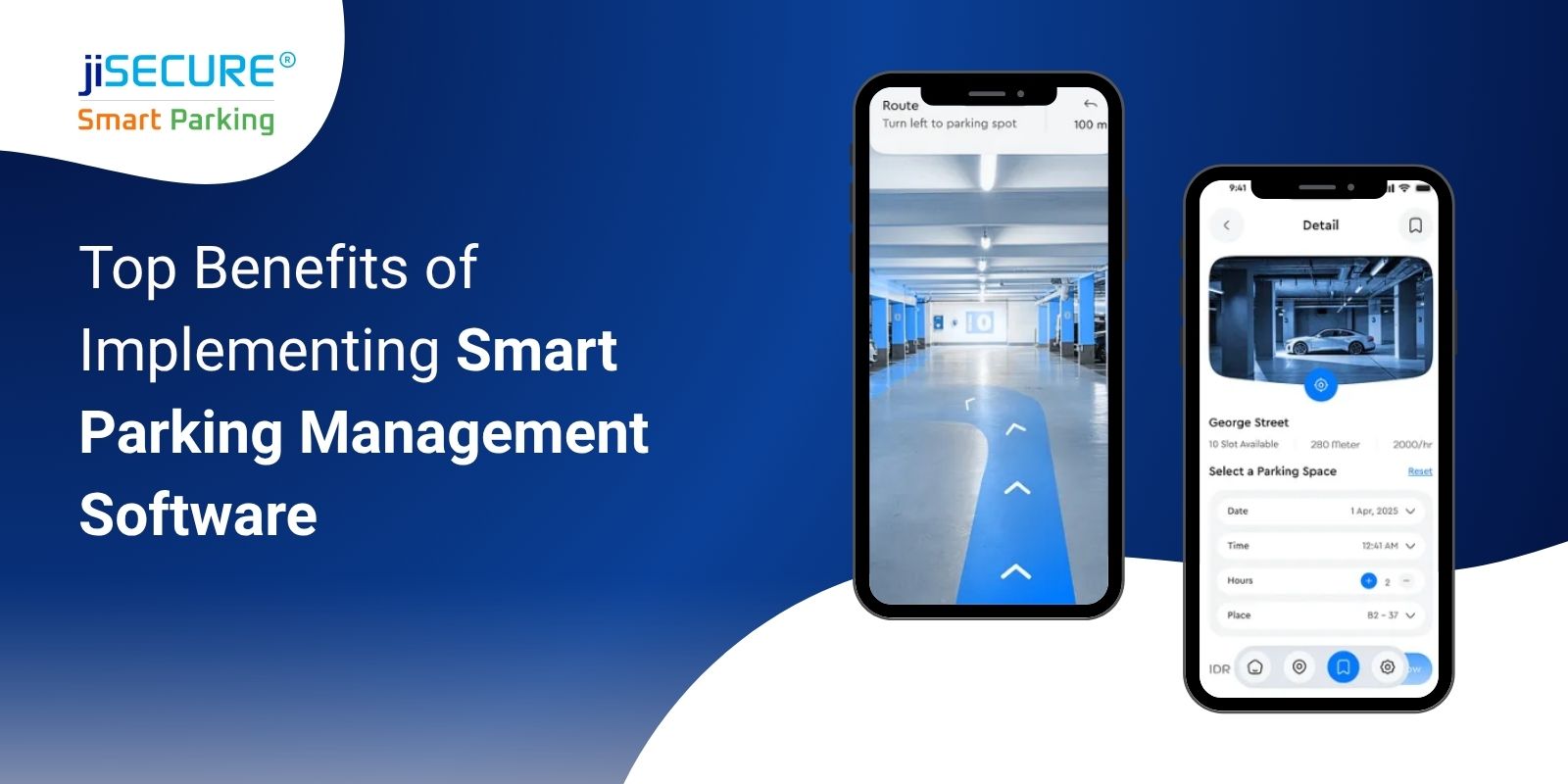
Parking is often the first and last touchpoint for a customer’s visit. A positive or negative parking experience shapes their overall perception. Smart Parking Management Software creates a frictionless experience by offering features such as real-time availability, pre-booking, contactless payment, and turn-by-turn directions to reserved bays.
Customers no longer waste time circling or waiting in queues; they arrive, park quickly, and proceed to their destination. For retail centers, hospitality venues, and event spaces, this smoother entry and exit process increases customer satisfaction, dwell time, and ultimately revenue. Our Smart Parking Software includes mobile app integration and clear signage options that keep users informed at every step, turning parking into a value-added part of the customer journey rather than a pain point.
4. Increase Revenue with Dynamic Pricing and Monetization
Parking is a revenue-generating asset, and Smart Parking Management solutions allow operators to monetize it more effectively. With dynamic pricing, rates can adjust based on demand, time of day, special events, or parking zone. High-demand times or premium locations can be priced higher, while off-peak periods can be discounted to encourage usage.
The software’s analytics dashboard shows demand curves and elasticity, enabling operators to set pricing strategies that maximize occupancy and revenue. Additional revenue streams become viable as well - premium reservations, in-app advertising, valet add-ons, or subscription models for regular users. By using Smart Parking Software to make pricing smarter and more responsive, operators convert underutilized assets into predictable and scalable income.
5. Improve Operational Efficiency and Reduce Costs
Manual parking management is labor-intensive: attendants, ticketing, and physical enforcement all have recurring costs. Smart Parking Management Software automates many routine tasks. Automated entry/exit logs, license plate recognition (LPR), and contactless payment reduce the need for large staffing levels, while remote monitoring allows managers to oversee multiple sites without being physically present.
Maintenance costs also decline because systems can proactively report equipment faults, sensor failures, or gate malfunctions. Predictive maintenance schedules, informed by system data, reduce downtime and extend the life of hardware. Energy savings are achievable too — intelligent lighting that activates only when vehicles or pedestrians are present reduces utility bills. Altogether, these efficiencies create a leaner, more cost-effective operation.
6. Strengthen Enforcement and Compliance
Effective enforcement is essential to maintain turnover and fairness in parking facilities. Traditional enforcement methods - periodic patrols or manual checks - are slow and inconsistent. Smart Parking Software provides continuous monitoring and accurate records of occupancy, overstays, and reserved spot violations.
With LPR and integration with permit databases, the system can identify unauthorized vehicles instantly and trigger alerts for enforcement actions. This not only improves compliance but also reduces disputes and administrative overhead. For cities implementing regulations such as curbside loading zones or time-limited spaces, Smart Parking Management solutions provide a reliable, transparent enforcement mechanism that supports policy goals and revenue collection.
7. Enable Seamless Digital Payments and Contactless Experience
Customers increasingly expect contactless, fast payment options. Smart Parking Management Software integrates multiple payment gateways, mobile wallets, and NFC/contactless solutions to accommodate user preferences. Drivers can pay through apps, in-vehicle systems, or QR codes - no cash, no tickets, no hassle.
This flexibility shortens queues at exits and reduces the risk of loss or disputes over payments. It also simplifies reconciliation for operators because transactions are logged automatically into the system, reducing human errors in accounting. Offering a modern, convenient payment experience is an essential part of positioning a facility as modern and customer-centric, and it drives repeat usage.
8. Generate Actionable Insights with Data Analytics
Data is a powerful lever for improving parking strategy. Smart Parking Management solutions aggregate historical and real-time data — occupancy patterns, peak usage times, duration distribution, and customer behavior — and translate them into actionable insights.
Operations teams can use these analytics for capacity planning, event management, marketing campaigns, and maintenance prioritization. For instance, analytics can reveal which times yield the highest turnover and which customer segments use subscription plans. Armed with this intelligence, managers can tailor promotions, adjust staffing schedules, and plan expansions precisely where demand justifies investment. Smart Parking Software turns raw sensor readings into strategic decisions.
9. Support Sustainability and Reduce Carbon Footprint
Cruising for parking contributes to emissions and urban pollution. By minimizing search time and improving vehicle flow, Smart Parking Management Software directly reduces vehicle miles traveled (VMT) and idling emissions. Additionally, energy-efficient operations (e.g., adaptive lighting, optimized HVAC in covered garages) further lower the environmental impact.
Some facilities use real-time data to encourage greener choices — preferential pricing for electric vehicles, reserved EV charging bays, or discounts for carpool vehicles. With public and private stakeholders increasingly focused on sustainability metrics, implementing Smart Parking solutions demonstrates environmental responsibility and can help meet regulatory or corporate sustainability targets.
10. Improve Safety and Security in Parking Facilities
Parking areas can be vulnerable to crime, accidents, or unsafe conditions. Smart Parking Software enhances security with features like LPR, integrated CCTV feeds, and real-time alerts for unexpected activity. Sensors can also detect obstructions, collisions, or unauthorized access, immediately notifying security personnel.
Better monitoring reduces theft and vandalism risks and speeds up response to incidents. Clear digital records of vehicle movements allow for thorough investigations if necessary. Improved lighting control and guided navigation also reduce pedestrian-car conflicts, increasing overall customer confidence when using a facility managed by modern Smart Parking Management solutions.
11. Simplify Event and Peak-Time Management
Events — concerts, conferences, and sports matches — create distinct parking challenges due to surges in demand. Smart Parking Management Software offers tools for event managers to pre-sell parking, assign zones, and provide scheduled access. Real-time dashboards show live occupancy and predicted fill rates, allowing for dynamic traffic routing and staffing adjustments.
Pre-booked parking reduces last-minute congestion, while segmented access lanes and digital signage direct arriving vehicles efficiently. Integration with ticketing systems and event apps further streamlines the guest experience. For venues and operators, this capability turns a logistical headache into a well-orchestrated entry and exit operation.
12. Enable Integration with Smart City and Mobility Ecosystems
Parking is a critical node in a broader mobility ecosystem. Smart Parking Software connects with public transit, ride-hailing, micromobility providers, and municipal traffic systems to create a cohesive urban mobility experience. By sharing occupancy data, parking systems help route drivers to the best transport options and can support multimodal journey planning.
Municipalities use aggregated parking data for urban planning, curb management, and policy enforcement. When integrated with traffic lights, curbside sensors, or transit schedules, Smart Parking Management solutions become a central component in reducing congestion and improving city livability. This interoperability is essential as cities pursue comprehensive smart-city initiatives.
13. Provide Scalability and Future-Proof Architecture
Investing in Smart Parking Management Software is an investment in the future. Modern systems are built on scalable, cloud-native architectures that support rapid expansion — whether you add more sensors, open new lots, or integrate new payment methods. Scalable deployments avoid the need for costly rip-and-replace upgrades.
Additionally, future features such as autonomous vehicle parking, advanced analytics, or machine-learning-driven demand prediction can be integrated progressively. Smart Parking Software designed for extensibility ensures your investment adapts as technology and user expectations evolve, protecting long-term ROI.
14. Enhance Branding and Competitive Differentiation
A seamless parking experience reflects on a business’s brand. For shopping centers, hotels, hospitals, and entertainment venues, providing modern parking solutions becomes a differentiator. Customers remember convenience; a stress-free arrival and departure contributes positively to their brand perception.
By implementing Smart Parking Management solutions and promoting features like guaranteed reservations, contactless payments, and real-time availability, operators can attract more visitors and enhance customer loyalty. Demonstrating a commitment to modern, user-friendly services positions your property as forward-thinking and service-oriented.
15. Reduce Liability and Improve Compliance Tracking
Accurate, timestamped records of vehicle entry, exit, and payments reduce disputes and legal exposure. Smart Parking Software keeps detailed logs that support claims resolution, billing disputes, and compliance audits. For municipal or private operators subject to regulations — e.g., accessible parking enforcement, taxation, or data reporting — the system simplifies compliance by producing verifiable reports.
Automated logs also help in incident investigations and insurance claims, as they provide objective evidence of events and timelines. Reducing ambiguity in operations not only lowers liability risks but also builds trust with customers and partners.
Conclusion - Why jiSecure Smart Parking?
At jiSecure Smart Parking, our mission is to deliver Smart Parking Management solutions that are practical, scalable, and results-driven. We’ve designed our Smart Parking Software to address real-world operational challenges: from maximizing capacity and improving traffic flow, to enhancing customer experience, increasing revenue, and supporting sustainability goals.
Implementing smart parking technology is no longer a futuristic luxury - it’s an operational necessity that creates immediate value and long-term strategic advantages. As jiSecure Smart Parking, we stand ready to partner with cities, property owners, and parking operators to transform parking into a smarter, safer, and more profitable service.
If you’re ready to experience these benefits firsthand, contact jiSecure Smart Parking to learn how our Smart Parking Management Software can be tailored to your facility’s needs.