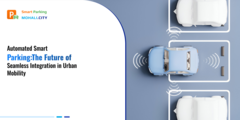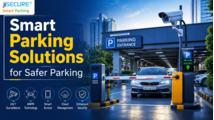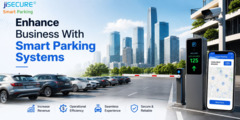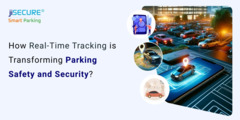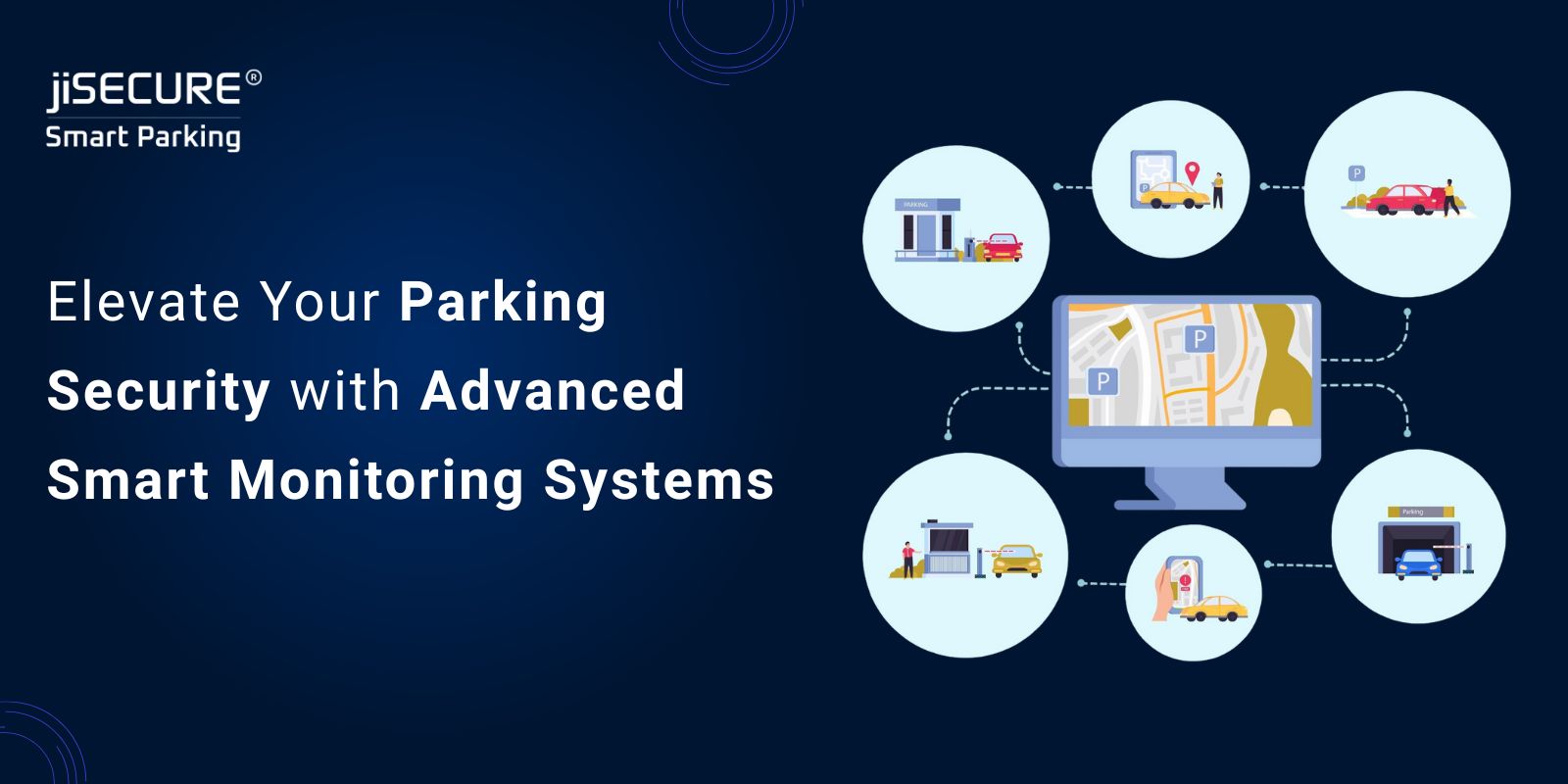
Parking spaces today face growing challenges - rising vehicle numbers, limited staff supervision, security risks, and inefficient manual operations. These issues often lead to unauthorized access, theft, congestion, and a poor user experience. To overcome these problems, many facilities are turning to Smart Parking Monitoring Systems. With technologies like real-time sensors, cameras, automation, and smart parking management software, these systems improve visibility, strengthen Parking Security, and streamline daily operations. Smart parking solutions make parking safer, faster, and more organized, helping both businesses and users benefit from a more secure and efficient environment.
What Are Smart Parking Monitoring Systems?
Smart Parking Monitoring Systems are integrated technology stacks that combine sensors, cameras, connectivity, and analytics to monitor parking spaces and activity in real time. These systems collect data on occupancy, vehicle movement, access events, and environmental conditions, then feed that data to smart parking management software that automates responses, generates alerts, and creates actionable insights.
Key functions include:
- Real-time occupancy monitoring to detect unauthorized parking or suspicious behavior.
- Video analytics for intrusion detection, license plate recognition, and incident recording.
- Automated access control to permit or deny entry based on rules and credentials.
- Event-driven alerts (flooding, fire, suspicious loitering) that integrate with security teams.
In short, they replace reactive surveillance with proactive, intelligent monitoring that improves Parking Security across the board.
Core Components of Effective Smart Parking Monitoring Systems
To achieve robust smart parking solutions, a system must integrate several core components. Each plays a critical role in maintaining security and operational efficiency.
1. Sensors and Occupancy Detectors
Sensors (ultrasonic, magnetic, or infrared) monitor whether a parking bay is occupied. These low-power devices reduce blind spots and enable accurate, near real-time maps of lot occupancy.
2. Video Surveillance with Analytics
High-resolution cameras with edge or cloud-based analytics provide license plate recognition (LPR), motion detection, facial anonymization where required, and behavior analysis. Video analytics converts raw footage into actionable alerts.
3. Access Control and Barrier Systems
Automated gates, smart bollards, and credential readers (RFID, NFC, QR codes) control ingress/egress. Integration with smart parking software enforces permissions and logs access events for audit trails.
4. Centralized Management Software
Smart parking management software aggregates data from sensors and cameras, presents dashboards, sends alerts, and enables remote control. This software is the operational brain — it sets rules, workflows, and response protocols.
5. Networking and Edge Compute
Robust connectivity (Ethernet, Wi-Fi, LPWAN) and edge computing enable low-latency processing for critical functions like real-time alerts, reducing bandwidth and improving reliability during peak events.
6. Mobile and Web Interfaces
User-facing apps and operator dashboards provide ticketing, payments, space guidance, and remote monitoring. They enable operators to respond immediately to incidents and users to find safe, available parking.
Benefits of Smart Parking Monitoring Systems for Parking Security
Implementing Smart Parking Monitoring Systems yields immediate and long-term advantages that directly impact Parking Security and operational efficiency.
Improved Situational Awareness
Operators receive real-time insights into occupancy, trespass, and unauthorized access. This reduces response time and allows security staff to act proactively.
Enhanced Deterrence and Reduced Crime
Visible cameras, automated barriers, and rapid incident response deter theft and vandalism. Analytics and access logs help law enforcement with investigations.
Faster Incident Response
Automated alerts for fire, flooding, or suspicious behavior accelerate response times and can be tied to on-site emergency systems for automated mitigation.
Streamlined Operations and Lower Costs
Automation reduces the need for patrols and manual checks, lowering operational costs while improving monitoring coverage and accuracy.
Better User Experience and Trust
Drivers value safe parking experiences. Smart systems provide secure entry, easy payment, and real-time space availability — boosting satisfaction and repeat usage.
How Smart Parking Software Improves Parking Security
At the heart of modern monitoring systems is smart parking software — the platform that interprets data, enforces policies, and orchestrates responses. Here’s how it strengthens security:
1. Real-Time Monitoring and Instant Incident Detection
One of the biggest security advantages of smart parking software is its ability to monitor the entire facility continuously. Traditional security teams rely on manual observation, which can lead to delayed responses and overlooked incidents. Smart systems eliminate these gaps by ensuring that every corner of the facility is under active supervision.
How it enhances security:
- It detects vehicle movement, unauthorized access, and occupancy anomalies instantly.
- AI-based analytics identify unusual patterns like loitering, reverse driving, or sudden stops.
- Alerts are generated in seconds, enabling staff to respond before the situation escalates.
This shift from reactive to proactive monitoring dramatically strengthens the overall Parking Security posture.
2. Automated Alerts and Intelligent Response Mechanisms
Automation is one of the key pillars of modern smart parking solutions. Instead of waiting for a human operator to detect and react to an issue, the system triggers automated alerts and predefined actions to ensure immediate response.
Examples of automated security responses:
- Locking or restricting gate access during suspicious activity.
- Triggering alarms or flashing lights in case of intrusion or unauthorized entry.
- Sending detailed alert notifications to security teams with timestamped video snapshots.
- Activating emergency workflows during accidents, fires, or hazardous events.
With smart parking management software, operators can ensure that every security incident - small or large - receives an accurate and timely reaction.
3. Enhanced Access Control and Identity Verification
Controlling who can enter and exit a parking facility is critical for reducing risk. Smart parking systems integrate with advanced access control technologies to ensure only authorized users and vehicles can access the premises.
Key access control features:
- License Plate Recognition (LPR) for automatic entry and exit logging.
- QR-based or RFID-based digital passes for employees, tenants, or subscribers.
- Integration with visitor management systems to track all entry events.
- Rule-based gate access that blocks unknown or suspicious vehicles instantly.
By adding identity-based access control, smart parking software makes it significantly harder for unauthorized individuals to enter restricted areas.
4. Centralized Data Logging and Evidence Collection
Every security event, access activity, and vehicle movement is recorded automatically in the system. This creates a complete digital trail that is invaluable for investigations, audits, and compliance.
Why this matters for Parking Security:
- Dashboards show real-time and historical access logs for complete transparency.
- Video footage is linked to individual events, helping resolve disputes quickly.
- Operators can trace suspicious patterns, repeat offenders, or unusual behavior.
- Data supports insurance claims and legal cases by providing verifiable evidence.
This level of documentation ensures accountability and reduces the chances of security breaches going unnoticed.
5. Predictive Analytics to Identify Risks Early
A major advancement in smart parking solutions is the use of AI-driven analytics. Instead of simply recording events, the system learns from them to predict potential risks and prevent security incidents before they occur.
How predictive analytics enhance security:
- Identifies times and zones with higher risk of theft or vandalism.
- Detects recurring behaviors that could indicate organized or repeated crimes.
- Suggests security adjustments, like increasing surveillance in vulnerable areas.
- Helps operators allocate guards and resources more efficiently using data-backed insights.
Predictive capabilities help parking operators stay one step ahead of security threats.
6. Secure and Fraud-Proof Payment Monitoring
Payments, ticketing, and validations are common areas where fraud can occur in parking facilities. Smart parking management software integrates secure payment gateways and transaction monitoring to fully eliminate such risks.
Security benefits include:
- Encrypted payment data to prevent tampering or theft.
- Automated reconciliation between payments and parking sessions.
- Digital records of transactions linked to vehicle identity.
- Fraud alerts triggered for suspicious or repeated failed payments.
This ensures that revenue remains secure and protected from fraudulent attempts.
7. Seamless Integration with Hardware and External Security Systems
Smart parking software works as a unified platform that connects multiple hardware and security systems for centralized control.
Examples of integrations:
- CCTV cameras
- License plate recognition systems
- Boom barriers and automated gates
- Fire alarms and emergency systems
- IoT sensors for occupancy or environmental monitoring
By merging all systems under one platform, operators have a complete, real-time picture of facility security, improving both safety and efficiency.
8. Continuous System Updates and Scalable Security
A major benefit of implementing smart parking software is its ability to grow and update over time. As new threats emerge, software enhancements and security patches ensure ongoing protection.
Key advantages:
- Regular updates strengthen system security and prevent breaches.
- New features and analytics models are added without hardware replacement.
- Cloud-based platforms provide scalability as facilities expand.
This ensures that parking facilities remain protected not just today, but in the future as well.
Implementation: How to Deploy Smart Parking Monitoring Systems
Deploying a robust Smart Parking Monitoring System requires more than simply installing sensors or cameras. It demands strategic planning, technology alignment, infrastructure compatibility, workforce training, and a structured rollout. At jiSecure smart parking, we follow a systematic and phased approach that ensures smooth implementation, operational stability, and long-term security benefits.
Below is a fully detailed breakdown of how to deploy smart parking solutions effectively.
Phase 1 — Assessment and Goal Setting
Implementation begins with understanding your current infrastructure and identifying what your facility needs to achieve. A strong foundation allows you to build a high-performing and security-driven parking ecosystem.
Key steps in this phase include:
- Security & Infrastructure Audit: We evaluate your existing cameras, access control systems, network capabilities, lighting, and layout. This helps identify blind spots, high-risk areas, and outdated equipment.
- Define Security Goals: Whether you want to prevent unauthorized access, reduce theft, automate occupancy monitoring, or manage traffic flow, we outline specific objectives for your smart parking deployment.
- Understanding User Behavior: Analyzing vehicle flow patterns, peak hours, and user types (employees, visitors, subscribers) helps determine what features and hardware are required.
This initial phase ensures that the deployment strategy aligns perfectly with your facility’s operational demands and security priorities.
Phase 2 — Pilot Deployment
Rather than launching the entire system at once, a controlled pilot rollout helps test solution performance in real conditions. This phase ensures that all hardware and software components function reliably before full-scale implementation.
Key steps in this phase include:
- Selecting a Test Zone: We choose a critical area such as the main entrance, exit, or a high-traffic floor to deploy sensors, cameras, and smart parking management software.
- Testing System Accuracy: Occupancy sensors, ANPR cameras, access control devices, and alert mechanisms are tested for precision, responsiveness, and reliability.
- Monitoring User Interaction: During the pilot, we analyze how both operators and users interact with the system — from gate access to mobile app usage.
- Collecting Performance Data: Insights from sensor accuracy, network latency, alert frequency, and user feedback guide the system’s refinement.
The pilot phase minimizes technical risks and gives clear visibility into real-world system performance.
Phase 3 — Full Rollout and Integration
Once the pilot performs successfully, we scale the system across the entire parking facility. This is where the technology integrates smoothly with existing infrastructure and daily operations.
Key steps in this phase include:
- System-Wide Installation: Sensors, cameras, IoT devices, and access systems are deployed throughout all entry points, parking floors, and critical areas.
- Integration with Existing Equipment: Whether you have legacy cameras or older barrier systems, our software integrates with them seamlessly, reducing replacement costs.
- Connecting to Centralized Software: All hardware devices are linked to the smart parking software, enabling unified monitoring, automation, and data logging.
- Workflow Automation: We set predefined rules for alerts, access permissions, ticketing, and security escalation, reducing manual intervention and human error.
- Staff Training Programs: Operators learn how to manage dashboards, respond to alerts, analyze data, and troubleshoot minor issues.
This phase transforms your facility into a fully intelligent, automated, and secure parking environment.
Phase 4 — Optimization and Continuous Monitoring
A Smart Parking Monitoring System continues to evolve even after deployment. Continuous optimization ensures long-term reliability, strong security protection, and improved operational efficiency.
Key steps in this phase include:
- Analyzing Data Trends: The system’s analytics help identify recurring issues, occupancy patterns, unauthorized access attempts, and peak-hour congestion.
- Refining Security Rules: Based on insights, we adjust access restrictions, alert settings, and surveillance zones for better Parking Security.
- Regular System Audits: Firmware updates, software patches, network checks, and camera optimization are performed regularly to maintain peak performance.
- Feedback Loop with Operators: We collaborate with your team to understand operational challenges and adjust the system accordingly.
- Scalability Planning: As your parking needs grow, new sensors or entry points can be added without disrupting the system.
Continuous monitoring ensures that your smart parking system stays updated, secure, and aligned with evolving threats and operational demands.
Data Privacy, Security, and Compliance
Handling video, identity, and transaction data demands strong privacy and security controls. Parking Security is incomplete without data governance.
Data Encryption and Secure Storage
Encrypt data both in transit and at rest, ensuring video, sensor logs, and personal data are protected from unauthorized access.
Privacy by Design
Implement privacy-preserving practices like anonymization, retention limits, and consent mechanisms, particularly where facial recognition or LPR is used.
Regulatory Compliance
Adhere to relevant regulations (GDPR, CCPA, local privacy laws) and maintain audit trails for compliance and incident investigations.
Role-Based Access Controls
Limit data access to authorized personnel and log all access events. Implement multi-factor authentication for administrative interfaces.
Secure design and disciplined governance build trust and reduce legal risk.
Future Trends in Smart Parking and Security
The future of Parking Security will be shaped by emerging technologies and evolving user expectations.
IoT and Edge AI
More processing at the edge will enable quicker decisions and reduce bandwidth while improving real-time analytics.
EV and Smart Infrastructure Integration
As electric vehicles proliferate, integration with charging stations and energy management systems will become standard.
Biometric and Identity-Based Access
Secure, user-friendly identity solutions will enable frictionless, personalized access while maintaining security.
Autonomous Vehicle Support
As autonomous vehicles emerge, parking systems will need to accommodate vehicle-to-infrastructure (V2I) communication and automated parking maneuvers.
Staying ahead of these trends ensures long-term relevance and security resilience.
Why Choose jiSecure smart parking for Your Smart Parking Solutions
At jiSecure smart parking, we design and deliver end-to-end smart parking solutions that prioritize security, reliability, and ease of operation. Our strengths include:
- Deep expertise in smart parking management software tailored for security-first deployments.
- Modular, interoperable systems that integrate with legacy infrastructure and scale with your needs.
- Proven analytics and AI capabilities to reduce incidents, optimize staffing, and improve ROI.
- Strong focus on privacy, compliance, and secure data handling to protect both operators and users.
- Dedicated support and service-level commitments to ensure continuous operation and rapid incident response.
We build solutions that are not only technologically advanced but also practical and operationally effective.
Conclusion
Effective Parking Security is no longer optional - it’s a business imperative. Smart Parking Monitoring Systems paired with robust smart parking software and smart parking management software deliver proactive surveillance, automated response, and insightful analytics that protect assets and people. At jiSecure smart parking, we specialise in delivering comprehensive smart parking solutions that secure your facility, optimize operations, and enhance user satisfaction.
If you are ready to elevate your parking security with an intelligent, scalable system, jiSecure smart parking is here to partner with you. Contact jiSecure smart parking today to learn how we can design and deploy a tailored solution for your facility.