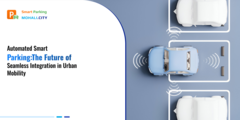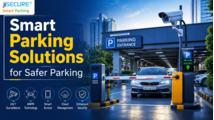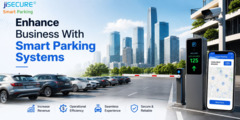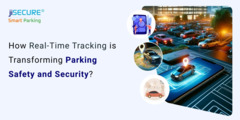
Urbanization and the steady increase in vehicle ownership have made parking one of the most visible pain points in modern cities. Drivers spend unnecessary time circling blocks searching for open spaces, traffic congestion grows around full parking facilities, and operators struggle with inefficient lot utilization and revenue leakage. Smart parking technology addresses these problems by replacing manual, analog processes with connected systems that provide real-time visibility, automated guidance, and data-driven operations. These solutions combine hardware (sensors, cameras, gates) and software (data platforms, analytics, user apps) to create smarter, safer, and more convenient parking experiences for drivers, operators, and city planners alike.
Key Takeaways
- Smart Parking Systems help drivers find parking faster, reducing frustration and saving time.
- Smart Parking Solutions optimize space utilization and improve overall operational efficiency.
- Smart Parking Software enhances security with real-time monitoring and automated access control.
- Smart parking management software reduces traffic congestion and environmental impact.
- jiSecure smart parking enables seamless, safe, and efficient parking experiences for both drivers and operators.
What Are Smart Parking Systems?
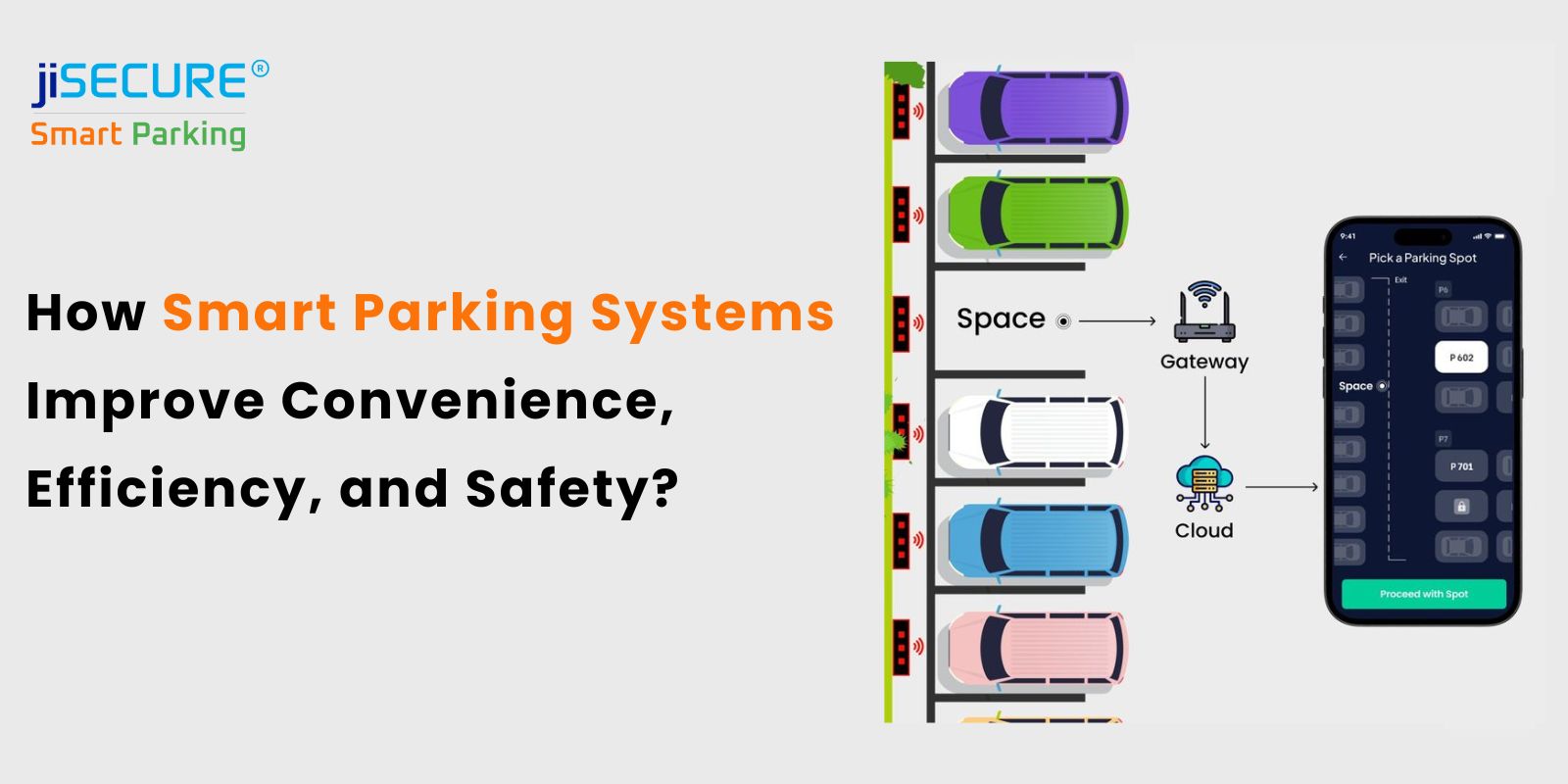
Smart Parking Systems are integrated networks that use sensors, connectivity, and software to monitor, manage, and optimize parking spaces in real time. At their core, they transform static parking assets into dynamic resources that can be monitored remotely, reserved in advance, and monetized more effectively. Smart parking platforms support a variety of use cases - from on-street parking management and commercial parking garages to corporate campuses and mixed-use developments - by providing accurate occupancy data, automated gate control, cashless payments, and user-facing guidance.
Key elements of Smart Parking Systems include:
- In-ground or overhead sensors that detect vehicle presence
- Cameras and LPR (License Plate Recognition) for access control and enforcement
- Gate and barrier integrations for automated entry and exit
- Mobile apps and digital signage to guide drivers to available spaces
- Cloud-based smart parking software and analytics platforms for operations and reporting
How Smart Parking Systems Improve Convenience
1. Real-time Availability and Guidance
One of the most immediate user benefits is the elimination of guesswork. Smart Parking Systems provide accurate, real-time visibility into available spaces and guide drivers directly to those spots.
- Real-time occupancy feeds from sensors or cameras update the system the moment a space becomes free or occupied.
- Mobile apps and dynamic wayfinding signs show nearest available spots, reducing search time and driver frustration.
- Integration with in-car navigation and third-party mapping services allows drivers to receive turn-by-turn directions to reserved or available spaces.
This reduces the average time drivers spend searching for parking—research consistently reports that search time contributes significantly to inner-city congestion and driver stress.
2. Reservation and Pre-booking Features
Smart parking management software enables advance booking for hourly, daily, or event-based parking.
- Users can reserve specific spots ahead of time using a mobile app or web portal, ensuring guaranteed entry on arrival.
- Reservation workflows can include time-bound holds, flexible cancellation policies, and tiered pricing for premium locations.
- For businesses and events, pre-booking reduces queues at entry points and increases customer satisfaction.
Pre-booking also supports predictable arrival flows, making staffing and traffic control more efficient for operators.
3. Seamless Cashless Payments and Subscription Models
Smart Parking Solutions modernize payment flows to be fully digital and frictionless.
- Contactless payments, mobile wallets, and account-based billing eliminate the need for paper tickets or on-site cashiers.
- Subscription and corporate account models support frequent users—commuters, employees, or residents—through monthly or annual billing schemes.
- Automatic reconciliation and digital receipts improve transparency for both users and operators.
Faster payment transactions shorten entry/exit queues and reduce the labor overhead associated with manual cash handling.
4. Accessibility and Inclusive Design
Smart parking systems can enhance accessibility for people with disabilities and other special-needs users.
- Dedicated accessible spots can be dynamically reserved and enforced through LPR and sensors.
- Mobile apps can present features like "closest accessible spot" or curbside drop-off coordination to improve last-mile convenience.
- Payment and reservation systems can support caregivers or third-party drivers, simplifying logistics for passengers with mobility challenges.
This improves equitable access to urban spaces and complies with ADA-like requirements in many jurisdictions.
How Smart Parking Systems Improve Efficiency
1. Optimized Space Utilization
Operators often lose revenue due to underutilized capacity. Smart Parking Systems optimize utilization through accurate, real-time data.
- Occupancy analytics identify frequently empty zones and help operators reconfigure pricing or signage to balance load.
- Dynamic pricing models—based on demand, time of day, and event schedules—encourage turnover and maximize revenue per spot.
- Space reallocation (short-term vs. long-term, EV charging vs. general parking) is driven by data rather than guesswork.
By optimizing allocation, operators can increase revenue while reducing overcrowding.
2. Reduced Operational Costs
Automation reduces the need for manual oversight and expensive staffing.
- Automated gate controls, validation systems, and digital enforcement reduce labor costs.
- Remote monitoring and diagnostics of field devices reduce on-site maintenance calls and improve uptime.
- Automated reporting and auditing simplify financial reconciliation and compliance.
Fewer manual touchpoints translate into fewer errors and faster operational cycles.
3. Integrated Facility Management
Smart Parking Systems act as centralized hubs for facility operations.
- Integration with building management systems (BMS) permits coordinated responses - for example, opening pedestrian gates during high-traffic periods or mobilizing ventilation in enclosed garages.
- Data from parking systems can be fed into broader mobility dashboards used by cities or campuses to manage overall traffic flow.
- Maintenance scheduling can be automated through predictive analytics based on device performance and usage patterns.
This integrated view enables smarter, coordinated facility management decisions.
4. Support for Electric Vehicles and New Modalities
As the vehicle fleet evolves, smart parking solutions help manage EV charging and multimodal riders.
- Smart parking management software can reserve charging bays, manage load balancing across chargers, and bill usage accurately.
- Integration with micromobility hubs (bike-share, scooter docks) allows operators to plan for mixed-transportation demands.
- Data-driven insights help determine optimal locations for additional charging infrastructure based on actual usage.
This flexibility ensures parking facilities remain relevant and profitable as mobility patterns change.
How Smart Parking Systems Improve Safety
1. Safer Pedestrian and Vehicle Interactions
Smart Parking Systems reduce risky behaviors that lead to accidents.
- Clear guidance and fewer circling vehicles lower the incidence of sudden stops and erratic driving within lots.
- Digital signage and mobile alerts can notify drivers of pedestrians or active loading zones.
- Controlled entry and exit flows minimize congestion, improving visibility and reaction times for drivers and pedestrians.
These measures reduce collisions and improve overall lot safety.
2. Enhanced Surveillance and Incident Response
Integrated cameras and LPR systems help with security and rapid incident management.
- Real-time video feeds combined with analytics can detect suspicious behavior or stalled vehicles.
- License plate recognition automates stolen vehicle detection and enables rapid identification of violators.
- Incident alerts can be routed to on-site security or local authorities with precise location data for fast response.
This proactive monitoring improves both perceived and actual safety for users.
3. Fraud Prevention and Enforcement
Smart Parking Solutions provide robust enforcement mechanisms to deter misuse.
- Automated detection of overstays, unauthorized EV charger usage, or misuse of accessible bays enables accurate citation workflows.
- Digital payment records and LPR logs provide clear audit trails for disputes and enforcement actions.
- Role-based access controls in admin software limit who can issue overrides or refunds, reducing internal fraud risk.
Accurate enforcement promotes fair access and deters rule-breaking behavior.
4. Emergency Management and Evacuation Support
Smart systems improve preparedness in emergencies.
- Centralized control of gates and digital signage enables directed evacuations or controlled lockdowns during critical incidents.
- Real-time occupancy data helps emergency responders understand where people and vehicles are concentrated.
- Integration with building or campus safety systems allows coordinated alerts and automated access control changes.
This capability reduces confusion and speeds safe resolution during crises.
Core Components of Smart Parking Systems
To operate effectively, Smart Parking Systems combine hardware, software, and services:
Sensors (in-ground, overhead, or camera-based): Detect presence and occupancy with high accuracy.
Cameras and LPR: Provide verification, security, and enforcement capabilities.
Gate/barrier controls: Enable automatic entry/exit based on payment or reservation status.
Payment and Wallet Gateways: Support cashless transactions, subscriptions, and invoicing.
Mobile and Web Apps: Offer drivers reservations, navigation, and payment interfaces.
Admin Dashboards: Present operators with revenue, utilization, hot-spot maps, and device health.
Cloud Services and Analytics: Store data, run optimization algorithms, and deliver actionable insights.
Integration APIs: Allow connection to existing property management systems, ERP, and city mobility platforms.
Together these components create a resilient, scalable, and extensible smart parking ecosystem.
Implementation Roadmap: From Assessment to Scale
A successful deployment follows a phased approach:
Assessment & Pilot: Conduct a site survey, define KPIs, and run a small pilot to validate sensor accuracy and user workflows.
Design & Integration: Map integrations with gates, payment gateways, and facility systems. Design user journeys for drivers.
Deployment: Roll out sensors, cameras, signage, and the software stack in phases to minimize disruption.
Testing & Tuning: Validate occupancy accuracy, payment flows, and wayfinding. Tune dynamic pricing and notification thresholds.
Operationalize: Train staff, launch customer-facing apps, and set up monitoring and SLAs for support.
Scale & Optimize: Expand to additional lots or city blocks, refine analytics, and introduce new services like EV management or premium reservations.
A carefully staged approach reduces risk and ensures measurable improvements in convenience, efficiency, and safety.
Conclusion - Why jiSecure smart parking Is the Right Partner
At jiSecure smart parking, we design and deploy end-to-end Smart Parking Solutions and smart parking management software that prioritize user convenience, operational efficiency, and safety. Our Smart Parking Systems combine reliable sensing hardware, intelligent Smart Parking Software, and intuitive mobile experiences to reduce search times, increase asset utilization, and enhance security for drivers and operators. We understand the financial and operational pressures facing parking operators and municipal agencies; our solutions are built to deliver measurable ROI through optimized pricing, automated enforcement, and streamlined operations.
If you are ready to transform parking into a smart, profitable, and secure component of your urban or commercial ecosystem, jiSecure smart parking can provide the planning, systems, and long-term support you need to succeed. Contact us today to begin your smart parking journey.
FAQ's
1. How do Smart Parking Systems detect available parking spaces?
Smart Parking Systems use IoT-enabled sensors, cameras, and real-time data analytics to monitor space occupancy. These technologies communicate instantly with centralized software, updating availability status on digital platforms such as mobile apps or display boards.
2. How do Smart Parking Solutions reduce traffic congestion in busy cities?
By guiding drivers directly to vacant parking spaces, Smart Parking Solutions minimize time spent circling roadways. This reduces unnecessary traffic buildup in high-demand areas and improves overall urban mobility.
3. Can Smart Parking Systems be integrated with existing infrastructure?
Yes. Modern solutions are designed with flexible architecture that allows integration with existing surveillance systems, ticketing machines, parking gates, and municipal traffic management platforms.
4. How do Smart Parking Systems help improve revenue management for operators?
Dynamic pricing, automated ticketing, and real-time occupancy data reduce revenue leakage while enabling better pricing strategies based on demand. This maximizes profitability without compromising user convenience.
5. What challenges can be solved by adopting smart parking technology in large commercial areas?
Major commercial zones face high parking demand, security issues, and inefficient manual monitoring. Smart solutions streamline entry-exit operations, enhance visitor experience, and reduce operational overheads for facility managers.